 Chinese Knot Guide
String for Chinese Knots: Cord Type, Grip, and Finish Checks
String for Chinese Knots: Cord Type, Grip, and Finish Checks with source context, practical checks, FAQ, and clear limits.
Quick Answer: The best string for Chinese knots depends on the knot size, cord stiffness, surface grip, sheen, and finishing method; beginners should test a short sample before committing to a full project.
String for Chinese Knots facts
- Material
- Cord surface, stiffness, and finish change tying behavior.
- Size
- Diameter must fit the knot scale and finished use.
- Risk
- Very slippery cord is harder for beginners to tighten evenly.
- Use case
- Bracelets, wall hangings, and button knots need different cord choices.
- Not for all knots
- One string does not suit every Chinese knot.
Choose cord diameter from the finished knot
Cord that looks manageable on a spool can become bulky after several crossings. Begin with the knot's finished scale and count how many strands will sit beside or over one another at the tightest point.
Small button-style knots usually need a finer cord than wall hangings. A thick cord can hide the path and resist tightening, while a very thin cord may collapse or show uneven tension.
Tie a short sample before cutting the final length. The sample reveals whether the diameter preserves the pattern and whether the knot will fit its intended loop, garment, keychain, or hanging.
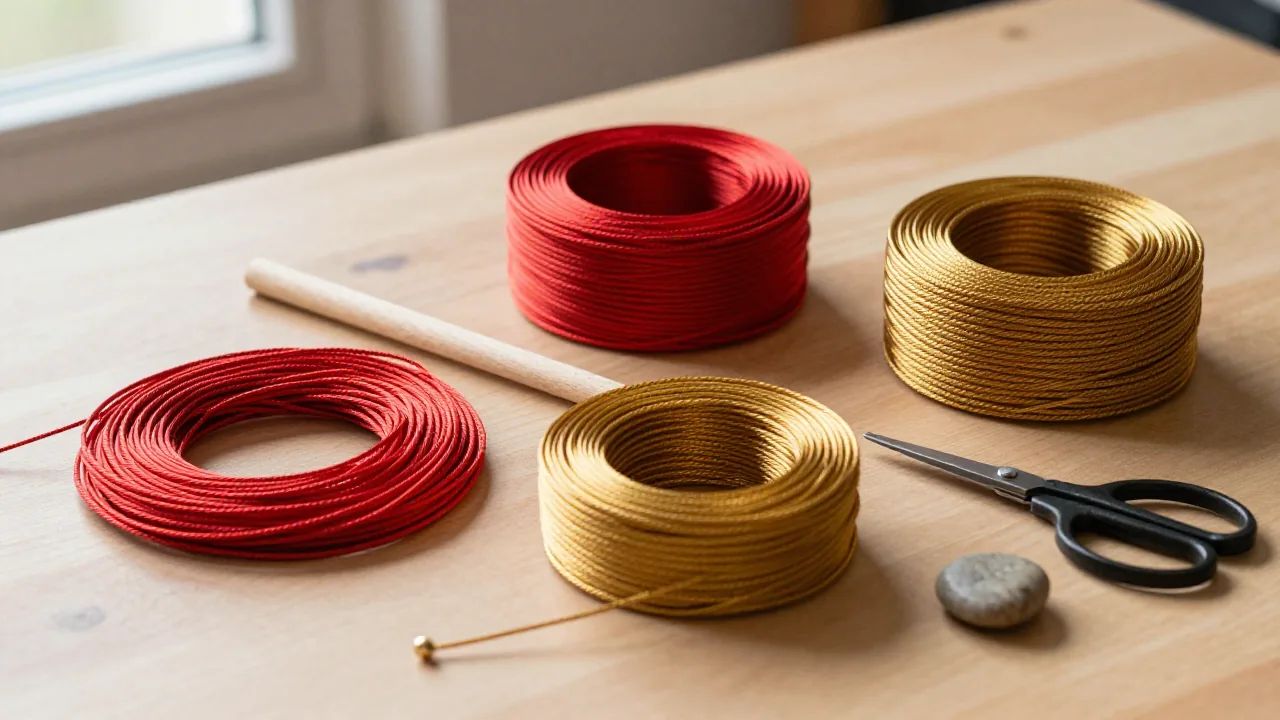
Match grip and stiffness to the learning stage
Beginners often benefit from cord with moderate grip because each crossing stays in place while the next loop is formed. Very slick satin-like cord can be attractive but may loosen before the path is complete.
A stiff cord holds an open layout clearly, yet too much stiffness makes compact curves difficult. Soft cord follows bends easily but can flatten and blur the structure if tension is uneven.
Handle a sample loop rather than judging by fiber name alone. Braiding, coating, diameter, and finish can make two cords of the same material behave differently.
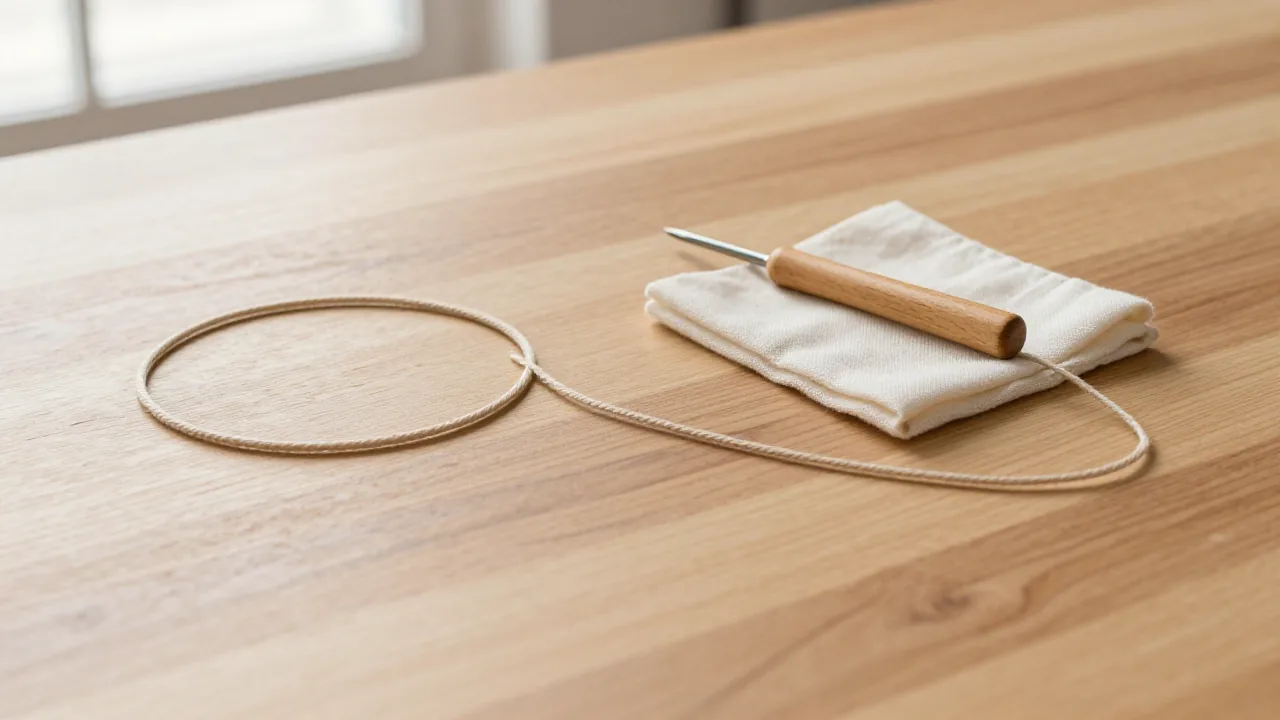
Allow enough length for the real cord path
Chinese knots consume more cord than their final outline suggests because the strand travels through crossings, paired loops, tails, and tightening slack. Cutting to the visible finished size almost always leaves too little material.
Use a practice piece to estimate consumption for the exact variation. Mark the starting length, complete the knot, and measure the remaining ends before scaling the estimate.
Keep extra tail length until tightening is complete. Trimming early removes the margin needed to correct a crossed segment or rebalance two sides.
Test how the surface handles repeated tightening
Pulling slack through several crossings can scuff coatings, twist braided cord, or create shiny pressure spots. Tighten in small stages and move around the knot instead of pulling one end hard.
Inspect the cord after the practice knot is opened. Fuzzing, permanent kinks, color transfer, or a damaged sheath indicate that the material may not tolerate repeated adjustment.
For wearable pieces, also check skin feel and whether cut ends become sharp. Decorative appearance should not override comfort or durability.
Plan the end finish before committing to a cord
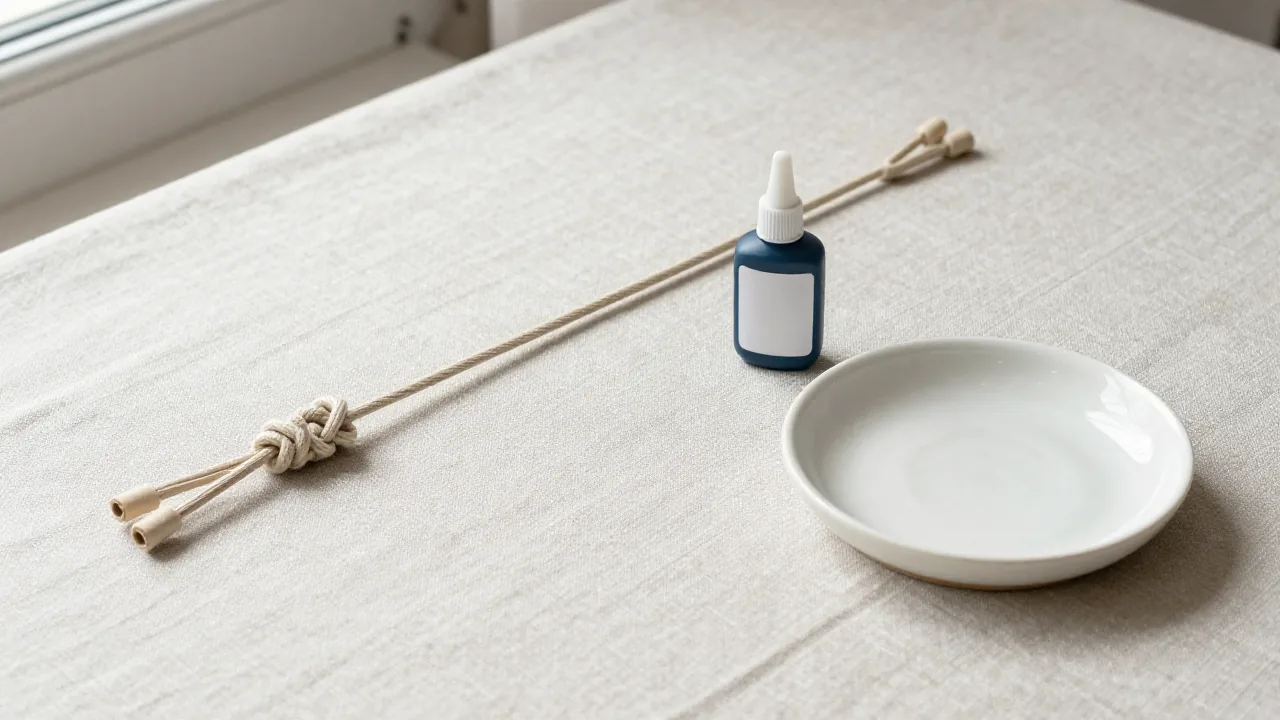
Different fibers need different finishing methods. Some synthetic cords can be heat-sealed carefully, while natural fibers may need stitching, wrapping, adhesive, or a hidden knot.
Do not apply flame or heat without confirming the material and using a safe work surface. Unknown coatings can melt unpredictably or release unpleasant fumes.
The best cord is the one that forms the chosen knot cleanly, survives tightening, suits the final use, and accepts a finish you can perform safely.
String for Chinese Knots review points
- First decision: Cord diameter must fit the knot scale.
- Grip: Very slippery cord is harder for beginners.
- Finish: Ends may need tying, glue, or heat-safe handling depending on material.
- Use: Wall hanging, bracelet, and button knot cords differ.
- Limit: This is craft guidance, not product endorsement.
String for Chinese Knots FAQ
What string is easiest for beginners?
A medium cord with enough grip is usually easier than very thin or very slippery cord.
Does color matter first?
No. Size, stiffness, and grip should be checked before color.
Can one cord work for every knot?
No. Knot scale and final use change the best cord.
Should I melt cord ends?
Only if the material is suitable and you can do it safely; many cords need another finish.
How should I test cord?
Tie a short sample knot and check shape, tightening, and end finish.