 Chinese Knot Guide
Chinese Knot vs Mizuhiki: Materials and Gift Context
A red knotted ornament and a red-and-white cord on a Japanese gift envelope can look related without being interchangeable. The useful comparison starts with what the cord is, what the object is for, and the occasion in which someone will receive it.
Quick Answer: Chinese knotting and Japanese mizuhiki are not simply two names for the same craft. Chinese decorative knotting uses a range of cords to create ornaments and practical forms; mizuhiki is characteristically a paper-cord craft with particular gift-wrapping and ceremonial uses. Similar colors or loops do not identify a named knot, prove a shared origin, or make one gift decoration appropriate for every occasion.
Quick facts: material, object, and occasion
- Mizuhiki material
- Washi-paper strips twisted into cord; finishes and coverings vary.
- Chinese knotting scope
- Decorative knot forms and applications, not one universal red knot.
- Gift-envelope context
- Mizuhiki color and knot choices can communicate the kind of occasion.
- Identification limit
- A photograph or color alone cannot establish material, provenance or ritual suitability.
The comparison concerns identification and use. It is not a tying tutorial or a claim that every cord product has the same composition.
Paper cord vs textile cord: the material difference
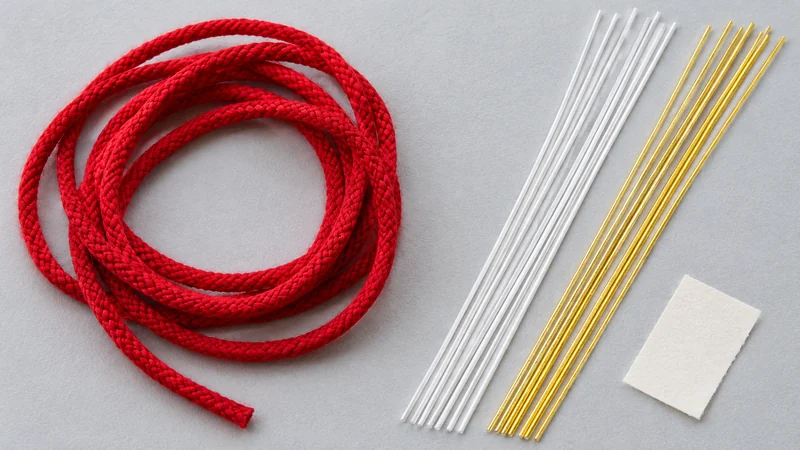
The Nagano Tourism Organization's account of mizuhiki describes strips of washi paper twisted into strings and stiffened, with colored silk also used in the finished material. The starting point is paper cord, even when the surface is colored or wrapped. Calling every glossy strand silk misses that distinction.
Chinese knotting is a broader cord-working practice rather than the name of that specific paper material. A contemporary knotting supplier, Cheng Hsin's cord catalogue, lists cotton and hemp cords alongside other cord categories. It documents the range in that supplier's stock, not a complete definition of every historical Chinese knot.
When buying practice material, ask for its stated composition and the instruction's required type. Do not substitute by color alone. A paper-cord project and a textile-cord project can require different handling even if their finished outlines appear similar. This comparison does not supply a tested substitution ratio or claim that one is universally stronger.
A knotted ornament and a dressed envelope are different objects
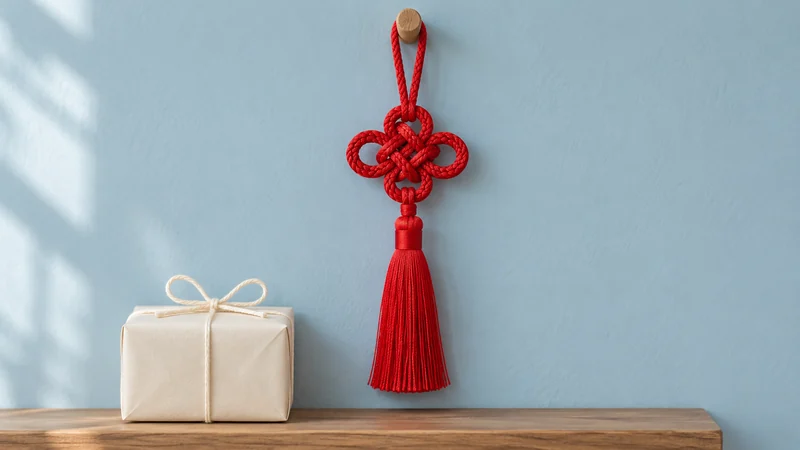
Taiwan's Tourism Administration describes Chinese knots as decorative forms with symmetrical designs. The National Cultural Memory Bank's Chinese knot record discusses applications including garment fastenings, hanging ornaments and fittings associated with objects. Those examples show why 'Chinese knot' does not mean only a gift-envelope tie.
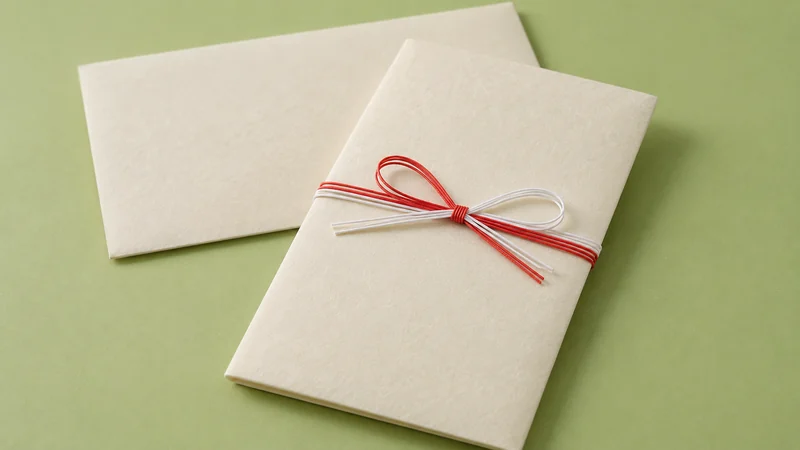
Mizuhiki is also more than an envelope accessory: Nagano's account describes decorative knots attached to gifts, while contemporary craft includes decorative objects. Still, the envelope context is particularly important because an attractive tie can convey a specific occasion, not merely a preferred color.
For a display label, identify the complete object first: a hanging cord ornament, an accessory, or a money-gift envelope with mizuhiki. Then record a named knot if a maker or reliable catalogue actually identifies it. Do not invent a knot name from a silhouette, or describe every interlaced decoration as one standard lucky knot.
Gift etiquette does not transfer with the color red
The Japanese paper merchant Haibara explains different ties for its kinpu envelopes. Its account contrasts a firm musubikiri tie, associated with occasions not wished to repeat, with a bow-like hanamusubi that can be retied for recurring celebrations. It also distinguishes celebratory and mourning color combinations. These are the merchant's explained conventions, not a rule inferred from our illustrations.
That distinction is enough to make a practical point: choosing a decoration because red looks cheerful is not the same as choosing a suitable Japanese wedding or condolence envelope. Ask a knowledgeable seller about the actual occasion, regional practice and recipient's expectations. A decorative Chinese hanging ornament is not an automatic substitute for a correctly prepared ceremonial envelope.
Equally, do not read a Japanese envelope convention back into every Chinese red-cord object. Meanings depend on the named form and use. An exchange between friends may allow a personal design choice, whereas a formal family ceremony may call for specific guidance. Describe the present you are giving without claiming that its knot guarantees luck or a relationship outcome.
Resemblance is not a history of transmission
Two works can share loops, symmetry or a wish for a good relationship without being the same named structure. A front photograph may hide crossings on the reverse, a covered paper core, or the way multiple strands are assembled. Visual similarity is a reason to investigate, not evidence of an exact construction match.
Haibara includes a traditional origin narrative involving gifts brought from Sui China. That narrative should not be expanded into proof that a particular modern Chinese knot and a particular mizuhiki design are identical, or into a complete timeline of influence. This article makes neither claim; its comparison rests on described materials and uses.
If an exhibition or class makes a more specific historical connection, ask which objects, dates and sources support it. Keep an attributed story separate from a dated surviving object and from a modern teaching sample. A resemblance between two generated illustrations cannot establish any of those relationships.
Choose the material for the project, not for the national label
For a Chinese decorative-knot exercise, use the cord and dimensions specified by the chosen instruction. For mizuhiki, choose a lesson written for that paper cord and its finish. Neither the word Chinese nor the word Japanese tells you the strand thickness, coating or handling limits of a packet in front of you.
The Chinese knot book guide explains how to inspect an edition's diagrams and material assumptions. Use it to judge an instruction sequence, not as a catalogue of mizuhiki patterns. A knot name and attractive finished photograph are not enough when you need to see every crossing.
For example, a workshop organizer comparing a soft cord ornament with a paper-cord gift decoration should obtain the two relevant material lists rather than buy one red spool for both. That is a planning example, not a tested substitution experiment. Ask the instructor about the intended material before cutting it or forcing it around a tight turn.
Keep the maker's description with the finished piece
Retain the supplied craft name, material information and intended use. For a gift, also note the occasion the seller advised for the chosen envelope or decoration. Those details are more useful later than a generic label such as 'Asian lucky knot.' They let someone appreciate the work without assigning it a history or ritual meaning it was never given.
Care advice also belongs to the complete object. Paper cord, textile cord, coatings, tassels and attached fittings should not be treated as interchangeable. The decoration-care guide discusses why an unknown ornament needs identification before washing; it is not a cleaning instruction for mizuhiki.
Choose the tradition and object that suit the actual task, then ask about its materials and occasion. You can appreciate both crafts without flattening their differences or claiming that one illustration teaches how to reproduce a named knot.
Quick Reference: compare like with like
| Question | Chinese decorative knotting | Mizuhiki |
|---|---|---|
| What is being named? | A cord-knotting practice and its forms | A paper-cord material and associated craft |
| What should I check? | Named form, cord and intended application | Paper-cord type, object and occasion |
| Can red settle identification? | No | No |
| Before a formal gift | Confirm the ornament's meaning and use | Confirm envelope, knot and color conventions |
Neither column is an exhaustive history or a universal rule for every community.
Questions when comparing the two crafts
Is mizuhiki just a Japanese name for a Chinese knot?
No. Mizuhiki characteristically refers to paper cord and its craft, while Chinese knotting describes a broader decorative cord practice. Similar shapes do not make the terms interchangeable.
Is every mizuhiki strand made entirely from silk?
No. The Nagano account describes washi-paper cord with colored silk also used. Check a specific product's composition and covering rather than identifying it by sheen.
Can I choose any red-and-white tie for a wedding envelope?
Do not assume so. Haibara explains that knot and color choices carry occasion-specific meanings. Ask a knowledgeable seller about the actual event and recipient's practice.
Can these photographs show me how to tie either design?
No. They are illustrative material and object comparisons, not verified crossing diagrams, named-knot identification evidence or complete construction sequences.
Craft descriptions and the scope they support
- Nagano Tourism Organization: Mizuhiki Paper Cord Art
- Haibara Online Museum: kinpu ties and gift occasions
- Taiwan Tourism Administration: Chinese Knots section
- National Cultural Memory Bank: Chinese knot applications
- Cheng Hsin: contemporary cord categories, not a universal specification
Sources read November 3, 2026. Supplier examples establish their own materials or practices; they are not universal rules. All three illustrations are newly generated, unbranded teaching scenes, not authenticated craft products or museum photographs.