 Chinese Knot Guide
Choose 1.4 mm Chinese Cord: Fit, Bends, and Finish
Choose 1.4 mm Chinese Cord: Fit, Bends, and Finish. Evaluate a nominal 1.4 mm sample for cord path, hardware clearance, surface condition, and finishing without stre
Quick Answer: Treat 1.4 mm Chinese knotting cord as a nominal dimension, not a strength specification. Test the actual sample through the intended number of hardware passes, a loose decorative cord path, and a material-appropriate end finish before committing to a larger project.
Nominal diameter and material handling
- Nominal diameter
- 1.4 mm is a product dimension, not a load rating.
- Two-pass example
- Two circular 1.4 mm strands have a nominal side-by-side width of 2.8 mm before compression or clearance.
- Fit variables
- Hole shape, coating, bends, braid compression, and number of passes.
- Material uncertainty
- Fiber and finish must be identified rather than inferred from shine.
- Safety limit
- Decorative use only; no climbing, lifting, or restraint claims.
What a nominal 1.4 mm measurement leaves unanswered
A diameter on a listing cannot show how a braid bends, how a coating changes its surface, or whether two passes fit a bead. For a decorative project, those practical details may matter more than the difference between adjacent size labels. The checks below are small-sample observations, not certified performance tests.
The label 1.4 mm describes a nominal product dimension. It does not disclose measurement tolerance, fiber, coating, compressibility, or breaking load. Millimetres are a unit of length; the BIPM SI Brochure explains the unit system, not the accuracy or safety of a particular cord.
If you measure a sample, note the tool and whether the braid was compressed. A soft cord pressed firmly between caliper jaws may give a different reading from the same cord handled gently. Record that observation rather than presenting a home measurement as a manufacturer specification. Keep strength questions entirely separate from a decorative fit test.
Treat 1.4 mm as the stated size of a cord product, not the size of every bend or finished knot it will make. A finished crossing can be thicker than a straight strand, and a doubled pass occupies more space than one strand alone. The intended project therefore matters when considering the label. A bead that accepts a single end may still be unsuitable for the return path. A fastening loop may bend differently from a long decorative strand. The label is a starting point for a fit test, while the actual arrangement determines which clearance you need.
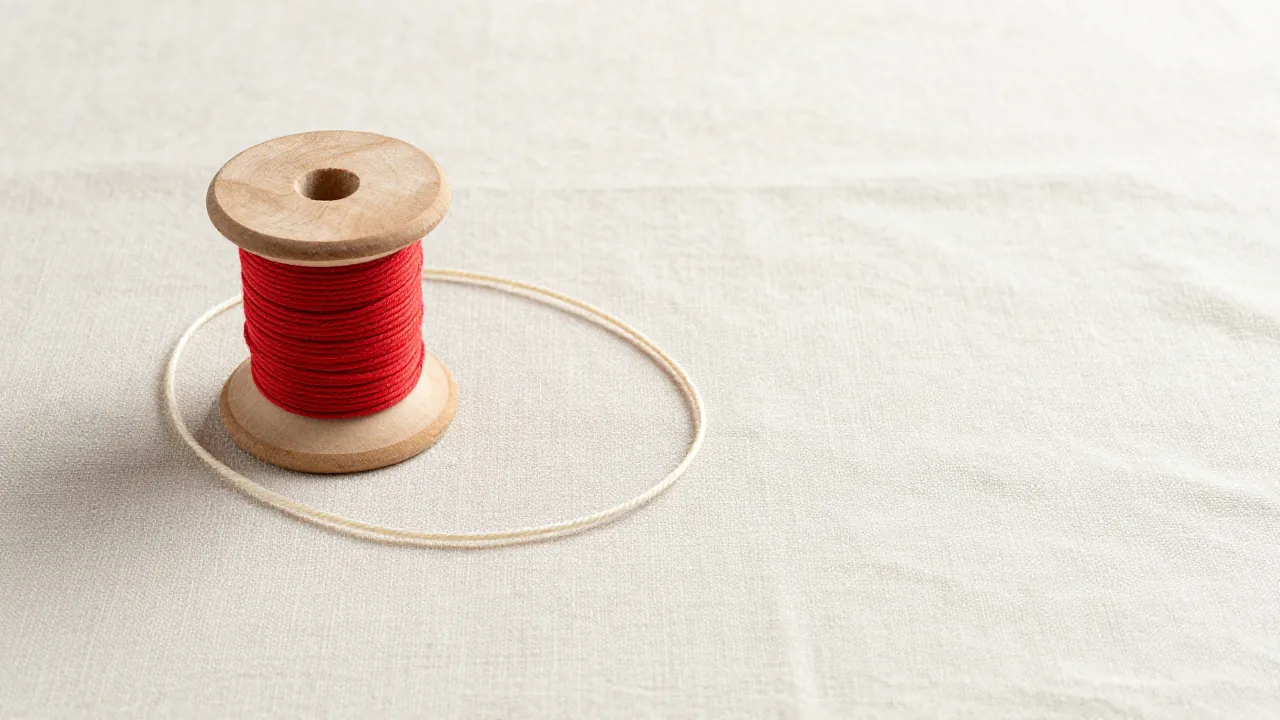
Check hardware clearance with the complete cord path
A bead may accept one pass and resist the second. Two ideal circular 1.4 mm strands have a nominal side-by-side width of 2.8 mm, but that simple geometry is not a guaranteed minimum hole size. Real hole shapes, end treatments, friction, and braid compression complicate the fit.
Test the complete intended route, including a return pass if the design needs one. Check for rough edges before threading. Do not force the cord through a sharp opening or use a damaged needle. A successful first pass is not evidence that the final path can be tightened without abrasion. Change the hardware or design when the sample snags.
If you measure a sample with a caliper, keep the method consistent and avoid squeezing the cord flat just to obtain a smaller reading. A flexible cord is not a rigid metal rod. Record whether you measured a relaxed straight section and whether the seller specifies a tolerance or a different measurement method. Repeating a measurement at several points can reveal variation in the sample, but it does not certify an entire spool. The SI unit reference explains millimeters as a unit of length; it does not establish the accuracy of a seller's diameter claim or the suitability of the cord for your knot.
Use a loose sample to judge bend behavior
Make a loose version of the intended decorative path before pulling it closed. Observe whether bends stay open enough to see, whether the cord twists, and whether slack can move through the crossings. This is a handling comparison, not a tutorial claiming that every knot has the same route.
Use enough spare length to reopen the sample. If a bend repeatedly flattens or a crossing locks early, note where it happens. Avoid solving every problem by pulling harder. A larger or smoother passage may be a better design choice than trying to force a nominal diameter through a path that does not suit the sample.
For a hypothetical bead project, test the route with a small offcut before cutting the full working length. Pass the end through the bead in the actual direction, then try the second pass if the design requires one. Check whether the end frays, jams, or needs excessive force. A fit that works once with a compressed tip may not remain convenient through repeated stages of the project. If the route is too tight, reconsider the bead or cord choice rather than assuming that a sharper tool or harder pull is the correct solution. Protect the working end and your hands from improvised force.
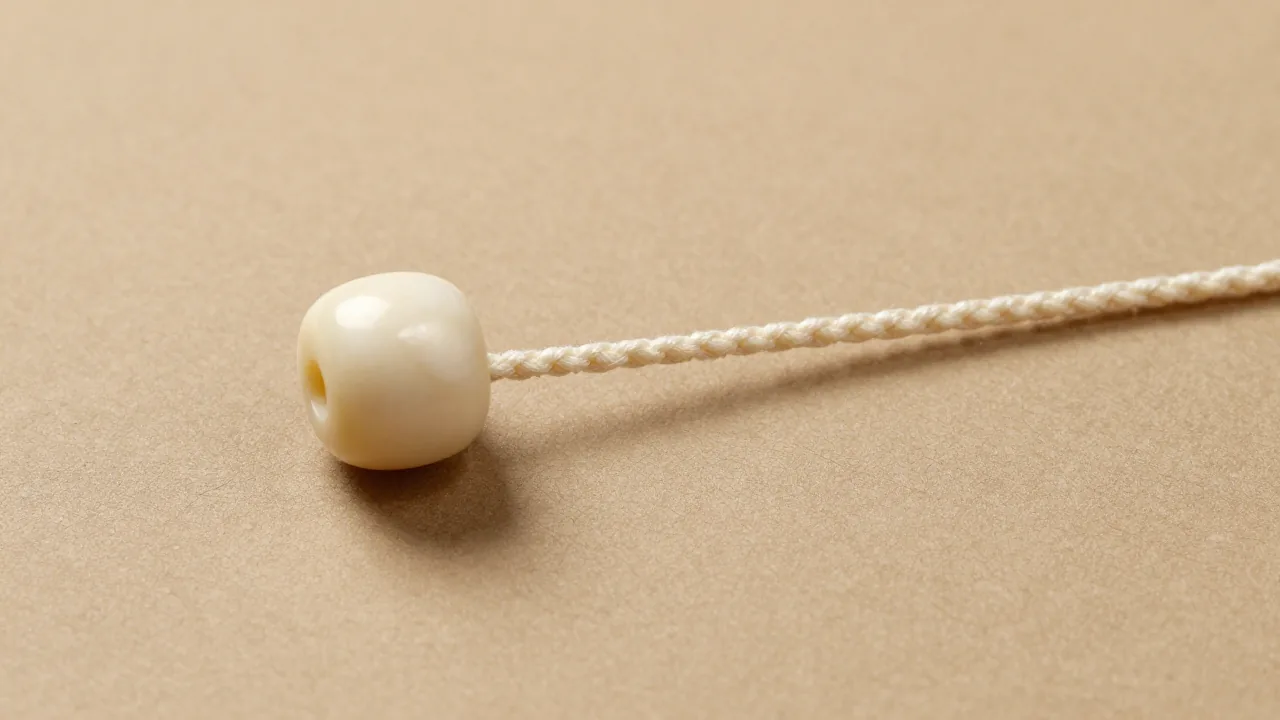
Surface finish affects the handling test
A glossy appearance does not identify the fiber or finishing treatment. Surface coatings may affect friction, while braid construction affects how crossings settle. Compare samples using the same loose path if you want a meaningful handling comparison. Color alone should not be used to infer material quality.
After tightening gently, inspect the sample for roughness, visible fuzz, or coating damage. Note whether an end has widened during threading. These are observations from that sample and route. They do not justify a claim that the cord will behave identically in every humidity, wash routine, or finished design. Ask for material information rather than substituting appearance for it.
A small test knot can answer questions a straight sample cannot. Tie the particular variation you intend to use, keep enough slack to adjust the crossings, and then tighten gradually. Notice whether the cord slips before the shape settles, whether the surface catches at crossings, and whether a tight bend leaves an unwanted mark. These are observations about the sample and technique, not universal properties of all 1.4 mm cord. The supporting photograph illustrates a loose decorative knot; it is not a verified step sequence for every Chinese knot or proof that a particular spool will produce an identical result.
Choose an end treatment only after identifying the material
Identify the material and follow relevant maker instructions before choosing an end treatment. Do not assume that a shiny cord is suitable for melting. Some materials may not respond as expected, and an unknown coating adds uncertainty. This draft does not recommend flame sealing an unidentified sample.
For an initial fit check, an unheated, reversible end can keep the trial simple. If cutting is needed, use suitable tools on a stable surface and keep small sharp items away from unsupervised children. Decorative cord is not appropriate here for climbing, lifting, restraint, or any use requiring a rated safety product.
Color and finish should be compared in the setting where the object will be used. A glossy strand can appear different under direct light and in shade, while a darker cord may make crossings harder to distinguish during practice. For learning, visibility of the path can matter more than a dramatic finish. Keep the product's fiber and care information if it is available, and do not infer heat resistance or washing suitability from color or sheen. If finishing instructions involve heat or an adhesive, follow the applicable material and tool instructions instead of assuming that every synthetic cord can be treated the same way.
A sample record worth keeping before a larger project
Save the nominal size, supplier's material description, measured observation, hardware used, number of passes, and any snagging or surface change. Keep the successful sample with the record if practical. The useful result is a fit judgment for one proposed project.
For a larger ornament, repeat the critical crossings in the final material rather than assuming the trial eliminates all uncertainty. Compared with a finer cord, the relevant question is not merely which number is larger; it is which sample makes the selected path readable and manageable. A sample that fails the intended fit test can still be suitable for another decorative design.
A useful 1.4 mm cord choice is a sample that suits a particular decorative path. Let the physical trial, not the size label alone, decide whether the project needs different hardware or a different cord.
When keeping a project note, save the seller's stated diameter, fiber description, the bead or fastening used, and the result of the offcut test. That is enough to make a future comparison more useful than a note saying thin cord worked. If you substitute a different spool, repeat the relevant fit and bend tests rather than relying on the matching 1.4 mm label. This guide does not verify a product listing, recommend a brand, or promise durability. It helps you identify which physical features and project constraints to check before committing the working length to a decorative knot.
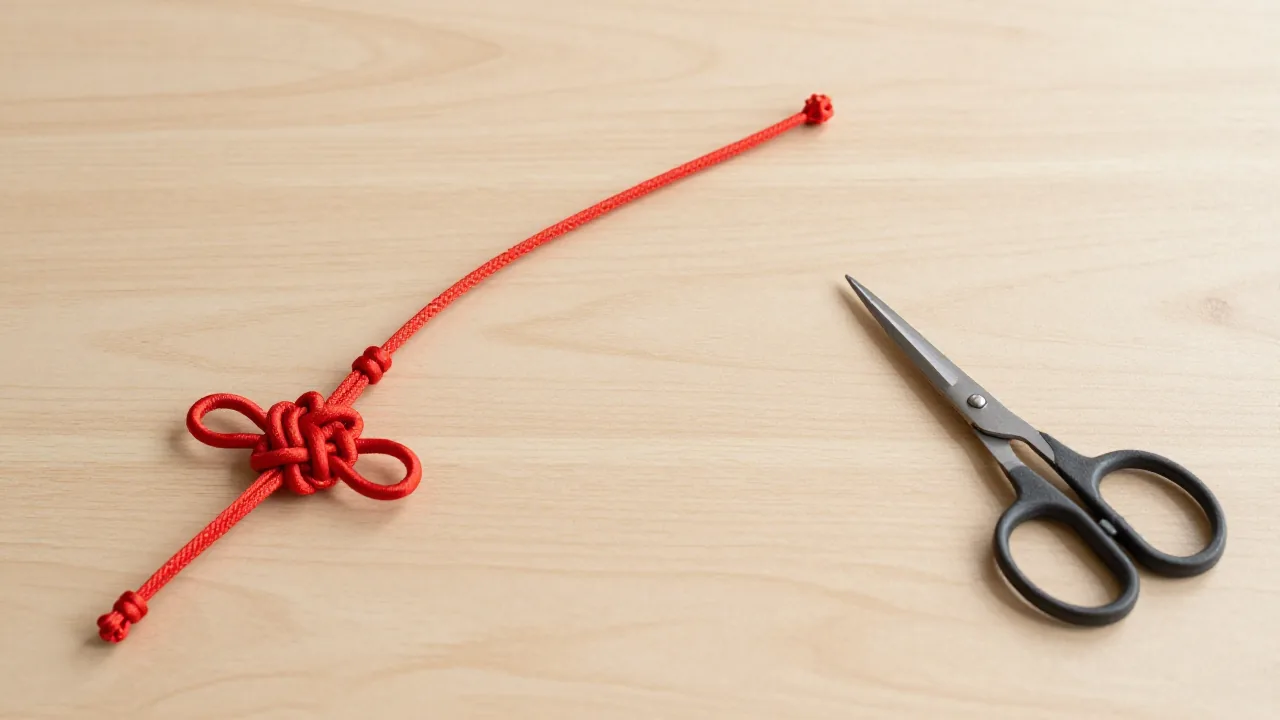
Cord sample decision points
- Nominal size -> actual material -> complete hardware route -> loose bend trial -> surface inspection -> suitable end treatment. No strength inference.
FAQ: Thin cord and hardware clearance
Is 1.4 mm a breaking-strength rating?
No. Diameter and load capacity are different properties. No load-bearing suitability is established here.
Will a 2.8 mm bead hole take two passes?
The ideal side-by-side width is only a starting observation. Actual shape, friction, and clearance require a sample test.
Should I compress the braid while measuring?
Record how the measurement was taken. Compression can change a soft cord reading and should not be hidden.
Can I burn-seal any shiny Chinese cord?
No. Identify the fiber and finish first; do not heat an unknown sample on the assumption that shine means synthetic fiber.
What should I retain after the trial?
Keep the sample, intended path, hardware, number of passes, and observed snags or finish changes together.