 Chinese Knot Guide
Friendship Knot Meaning: Cross Knot, Gift Context, and Limits
Learn what friendship knot can mean in Chinese knotting, how the cross-knot name differs from a friendship bracelet, and what to verify before explaining a gift.
Quick Answer
"Friendship knot" does not always name one universal design. In Chinese knotting references, the English label is often associated with the cross knot, a compact decorative structure whose two faces can look different. In everyday gift language, the same phrase may also describe a bracelet, lanyard, or handmade cord piece given between friends.
The safest meaning is therefore contextual: the knot can express connection, care, or remembrance when those ideas are part of the gift, but its name alone does not prove a fixed cultural message or promise a lasting relationship.
Quick facts
- Technical use: A common English alias for the cross knot in Chinese decorative knotting.
- Visual clue: A compact, balanced knot with a cross-like face; the reverse may look squarer.
- Gift use: The giver may use a knot or bracelet as a personal token of friendship.
- Common mistake: Treating every knotted bracelet as the same historical Chinese knot.
- Claim limit: A symbolic gift cannot guarantee harmony, loyalty, luck, or a future outcome.
First identify what the phrase is naming
Imagine receiving a red cord charm from a friend. One person may call the central shape a friendship knot because it resembles the cross knot shown in Chinese knotting references. Another may use the phrase only because the object was exchanged between friends. Those are related ideas, but they are not the same claim.
Before explaining the meaning, look at the object itself:
- Is there one compact knot with four clear directions or arms?
- Is it part of a bracelet, neckerchief, lanyard, keychain, or hanging ornament?
- Was the name supplied by the maker, a pattern book, a shop, or the recipient?
- Is the claimed meaning attached to the knot structure, or to the act of giving it?
That short check prevents an attractive story from replacing identification. It also respects the difference between a named craft structure and a personal friendship gift.
The cross-knot sense is structural before it is symbolic
Lydia Chen's classification of Chinese knotting includes the cross knot among the basic structures used to build decorative work. English-language knot references also connect "friendship knot" with this cross-knot form and note that it has been used for lanyards and neckerchiefs.
That evidence supports a modest conclusion: the phrase can name a recognizable decorative knot. It does not establish that every maker, region, or recipient gives the knot exactly the same symbolism.
The front and back matter when identifying it. A cross-like face can appear on one side while the reverse reads as a compact square. Cord thickness, tension, added loops, and the surrounding project can make the form look different from a clean pattern-book example. If the object has many repeated knots, beads, or a sliding closure, identify those parts separately rather than naming the whole piece from one small detail.
For an overview of other named structures, compare the site's types of Chinese knots page. A different structure may carry a different craft name even when the finished objects are both given as friendship gifts.
Gift context can add meaning without rewriting the knot's history
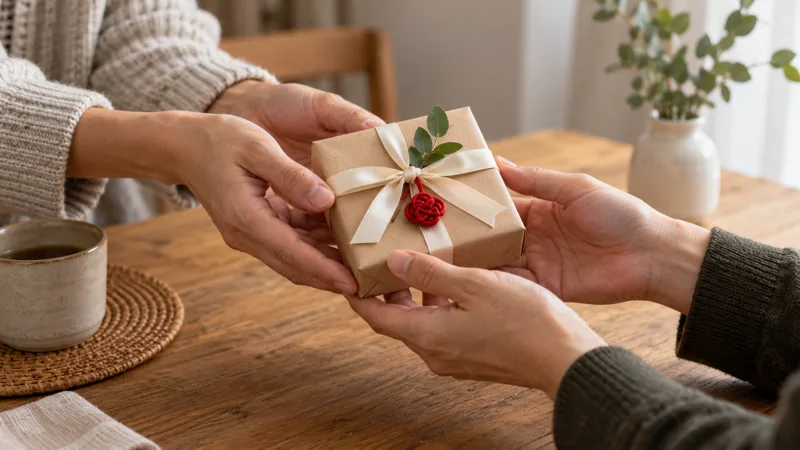
A handmade object often gains personal meaning from the exchange. Time spent choosing cord, learning a pattern, or making something to fit a friend can communicate care more clearly than a broad symbolic claim.
For example, a maker might choose two colors connected to a school, a shared trip, or the recipient's preference. That color choice is a personal layer. It should not be presented as a universal Chinese color code unless a reliable source and a specific cultural context support the claim.
The same restraint applies to occasion. A small knot attached to a graduation gift may mark a friendship at a transition point. One tied to a travel bag may function as a reminder of the giver. Neither use guarantees that the knot historically meant graduation or safe travel.
A friendship knot is not automatically a friendship bracelet
The two terms overlap in ordinary speech, but they answer different questions.
- Friendship knot: Usually points to a named decorative knot, often linked with the cross-knot form. Verify the structure, both faces, the cord path, and the source of the name.
- Friendship bracelet: Usually points to a wearable object exchanged or made as a token between friends. Verify the bracelet technique, fibers, closure, fit, and personal gift context.
- Chinese knot bracelet: Usually points to a bracelet that uses one or more Chinese decorative-knot structures. Verify the exact knot type, cord, finish, and whether cultural claims are sourced.
This distinction matters when following instructions. A friendship-bracelet tutorial may use rows of half hitches, braids, or macrame patterns rather than a Chinese cross knot. Conversely, a cross knot can appear in a lanyard or neckerchief without becoming a bracelet at all.
Readers who want the wearable project can use the separate Chinese knot friendship bracelet tutorial. Keeping the object and the knot structure separate makes both guides clearer.
Read material, color, and finishing as evidence about the object
Material details can tell you how the piece was made and used. Smooth satin cord holds crisp decorative curves; softer cotton may make a more relaxed bracelet; a thicker cord can enlarge the same structure. These choices affect appearance and durability, not a person's fortune.
Inspect finishing before wearing or gifting the piece. Look for even tension, secure ends, no sharp melted tips against skin, and a closure that does not tighten unexpectedly. A decorative knot that is loose, glued poorly, or attached to a weak ring may fail even if its symbolism sounds appealing.
Color deserves the same practical approach. Red is common in Chinese decorative knotting and can carry auspicious associations in Chinese cultural contexts. Still, a red friendship gift is not proof of a single intended message. Ask the maker or giver when their intention matters.
For broader cultural context, see Chinese knot meaning. For gift selection, the Chinese knot gifts guide separates occasion, object, and claim boundaries.
A responsible explanation keeps three layers apart
Use three short sentences when describing a piece:
- Object: "This is a red cord charm with a compact cross-style knot."
- Source: "Some English-language Chinese-knotting references call this a friendship knot or cross knot."
- Personal context: "It was made as a gift to mark our friendship."
That wording is more informative than saying the knot universally "means eternal friendship." It tells the reader what can be seen, where the name comes from, and what the gift meant to the people involved.
Quick reference
- Identify the exact knot before explaining symbolism.
- Treat "friendship knot" as a term that may refer to a cross-knot structure or a personal gift label.
- Do not assume that a friendship bracelet uses Chinese knotting.
- Ask about the maker's intention when the personal meaning matters.
- Describe color and material without promising luck or relationship outcomes.
- Keep craft history, object function, and personal story in separate sentences.
Frequently asked questions
Is a friendship knot a Chinese knot?
It can be. Some Chinese-knotting references use friendship knot as an English name for the cross knot. The phrase is also used more broadly for decorative knots and friendship gifts, so inspect the actual structure.
What does a friendship knot symbolize?
It may express connection, care, remembrance, or a personal bond when given between friends. Those meanings come partly from the exchange and should not be treated as a universal promise attached to every knot.
Is a friendship knot the same as a friendship bracelet?
No. A knot is a structure; a bracelet is an object. A bracelet may contain a friendship knot, use another Chinese knot, or be made with a different braiding or macrame technique.
Does the color red guarantee good luck?
No. Red has auspicious associations in many Chinese contexts, but a red cord does not guarantee luck or reveal the giver's exact intention. Color should be read with the object and occasion.
How can I identify a friendship knot accurately?
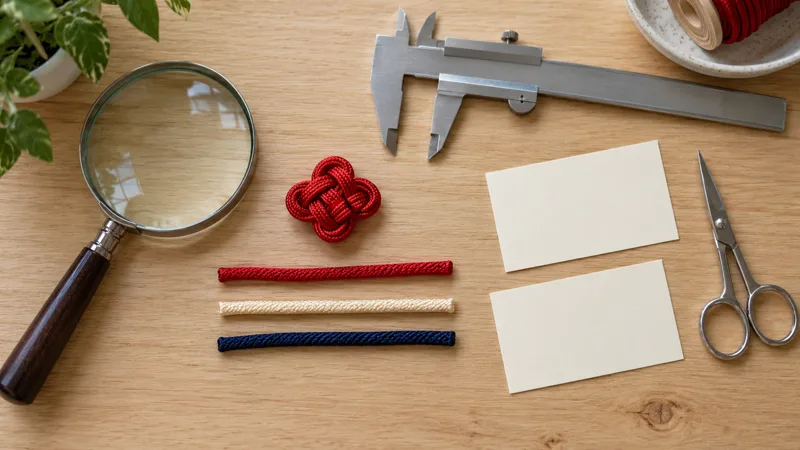
Photograph both faces, note how many cord ends enter and leave the knot, record the object's use, and compare it with a reliable knotting reference. If the structure remains unclear, describe the visible form instead of forcing a name.