 Chinese Knot Guide
Chinese Knot Colors for Beginners: Meaning Before Matching
Learn Chinese knot color meanings for red, gold, green, and blue in gifts, weddings, and home decor, with cultural context rather than promises.
Chinese knot colors are best read in context: red commonly suits festive and welcoming settings, gold often supports a design as an accent, and green or blue need a specific material and occasion rather than a universal meaning.
Color associations that need a setting
- Red cultural context
- Often used for festive decor, welcome, and celebratory gifting.
- Gold pairing role
- Usually reads best as a smaller accent beside red or another main color.
- Modern color variation
- Green and blue can be contemporary design choices; their meaning is not one fixed rule.
- Material and lighting
- Cord sheen, wall color, and the object it is tied to change how a color reads.
- Meaning boundary
- A color can express a wish or cultural association; it does not guarantee an outcome.
Why red belongs in festive and welcoming settings
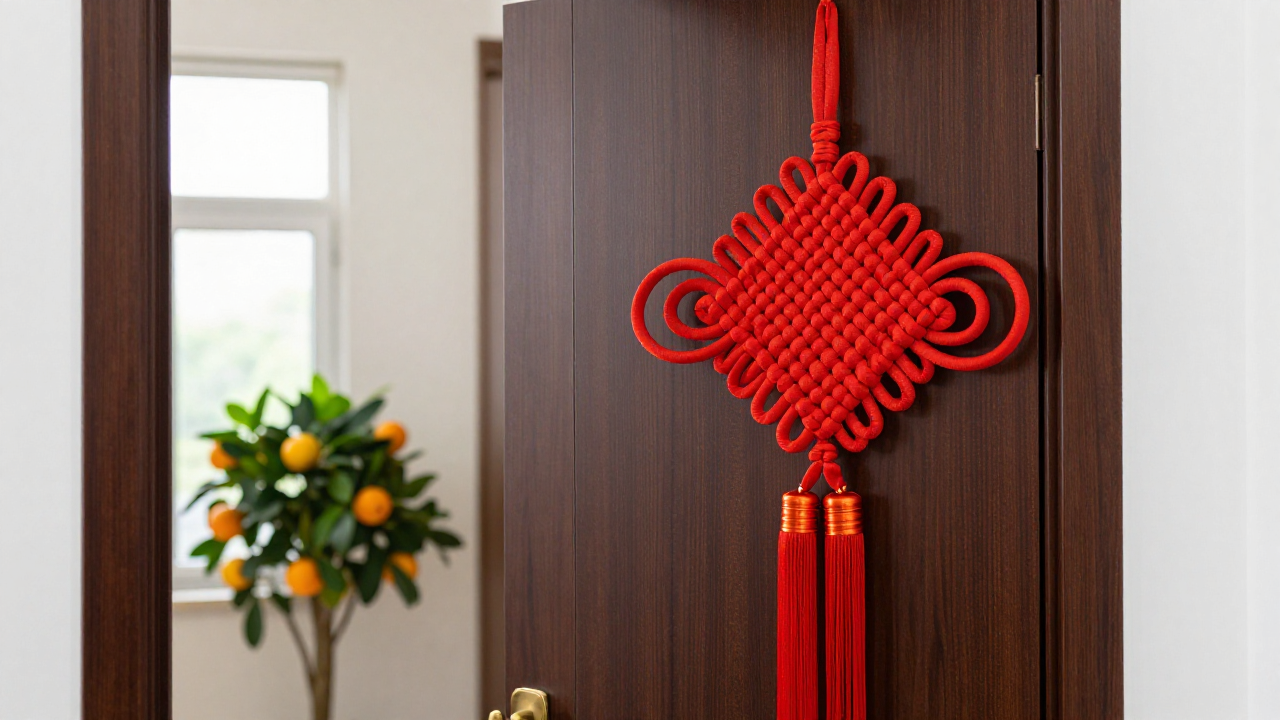
Red is the color most readers expect to see in a Chinese knot, especially around Lunar New Year, doorways, gifts, and celebratory displays. It reads clearly from a distance and keeps the braided loops visible when the surrounding wall is calm.
That association is useful only when it fits the setting. A small red knot can welcome someone at an entryway, while a large one may overpower a narrow hall or compete with a patterned door. Look at the knot body, tassel, handle, and wall together before deciding that more red is better.
The color carries a cultural wish for celebration and good fortune in many uses, but it is not a promise. Let the visible place and the recipient guide the choice.
When gold works better as an accent than a full knot
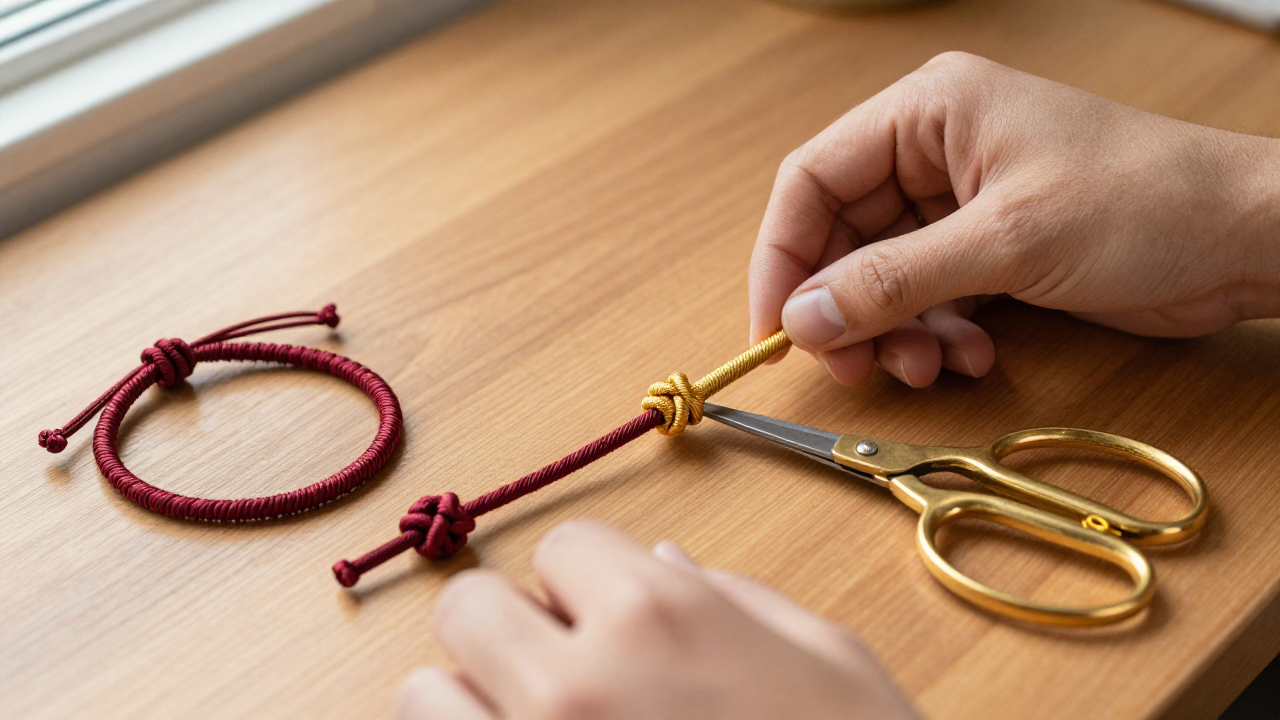
Gold cord catches light quickly, so it often works best as a border, small button knot, bead detail, or partner for red rather than the entire piece. On a pale gift box, a muted gold knot can look deliberate without demanding the same attention as a bright red hanging.
The practical test is material contrast. Compare the gold cord beside the red cord, then check whether the weave is still easy to see. A metallic-looking cord can flatten the structure when it is too shiny or when the knot is very small.
For a gift or wedding favor, use gold to reinforce a warm, celebratory palette, not to make a broad claim about wealth or future success.
Using green and blue without inventing a fixed code
Green and blue knots appear in modern craft work, jewelry, and home decor because they can soften a room or work with a particular textile. They are not interchangeable with a historical rulebook: the knot type, region, maker, and occasion all affect how a color is read.
A green cord may sit naturally beside plants or jade-toned accessories; blue may suit a cooler contemporary interior. Those are design choices, not proof that the color brings a particular result.
When a seller or listing assigns a firm promise to any color, separate the product description from the cultural association. Check the knot's finish, material, and intended setting first.
Match the knot to the setting you can actually see
A wedding favor, a housewarming gift, and an entryway ornament ask for different color decisions. On a wedding table, muted gold can connect an ivory box and a red ribbon without making either detail feel heavy. At home, the same gold may disappear against a warm wall unless the cord texture has enough contrast.
Before tying or buying a knot, place the materials near their final object. Check the light, the background, the size of the knot, and whether the tassel changes the balance. This small comparison is more useful than trying to memorize one meaning for every shade.
If the choice is a gift, explain the color as a respectful wish or a visual match. That keeps the symbolism clear and the recommendation honest.

A five-minute color and setting check
- Place the cord beside the door, gift wrap, or room where it will actually appear.
- Check whether the braided structure is visible under the room's normal light.
- Use gold as an accent when a full metallic knot would flatten the weave.
- Treat green and blue as contextual design choices, not a universal code.
- Describe a color as a wish or association, never as a guaranteed result.
Questions about Chinese knot colors
What does a red Chinese knot usually represent?
Red Chinese knots are commonly used in festive, welcoming, and celebratory settings. The exact association depends on the knot, occasion, and context, so it should be described as cultural symbolism rather than a guarantee.
Can gold be used for a Chinese knot gift?
Yes. Gold often works well as an accent with red or another main color, especially when the cord texture stays visible against the gift material.
Do green and blue Chinese knots have one fixed meaning?
No. Green and blue are used in modern craft and decor, but their interpretation depends on the design, setting, and maker rather than one universal code.
Can a Chinese knot color guarantee luck or a result?
No. A color can communicate a cultural wish or visual theme, but it cannot guarantee luck, wealth, safety, marriage, or another outcome.