 Chinese Knot Guide
Chinese Button Knot Meaning: Closure, Ornament, and Context
Learn what a Chinese button knot means by looking at its compact form, closure use, decorative setting, and cultural context.
A Chinese button knot is a compact rounded knot used as a closure, cord end, or decorative finish. Its meaning comes from the object, placement, and occasion, so it should be explained as a crafted cultural detail rather than as a fixed promise of luck.
Chinese button knot meaning in context
- Recognizable form
- The button knot is a compact rounded knot often used where a closure or neat end point is needed.
- Practical use
- It appears on garments, cords, jewelry, gift ties, and small decorative finishes where structure matters as much as symbolism.
- Meaning boundary
- Its meaning comes from the object, occasion, and presentation rather than from one fixed universal promise.
- Material check
- Cord thickness and finish affect whether the knot reads as a fastener, an ornament, or both.
- Claim limit
- A button knot is a craft and design detail, not proof of luck, status, romance, or future outcomes.
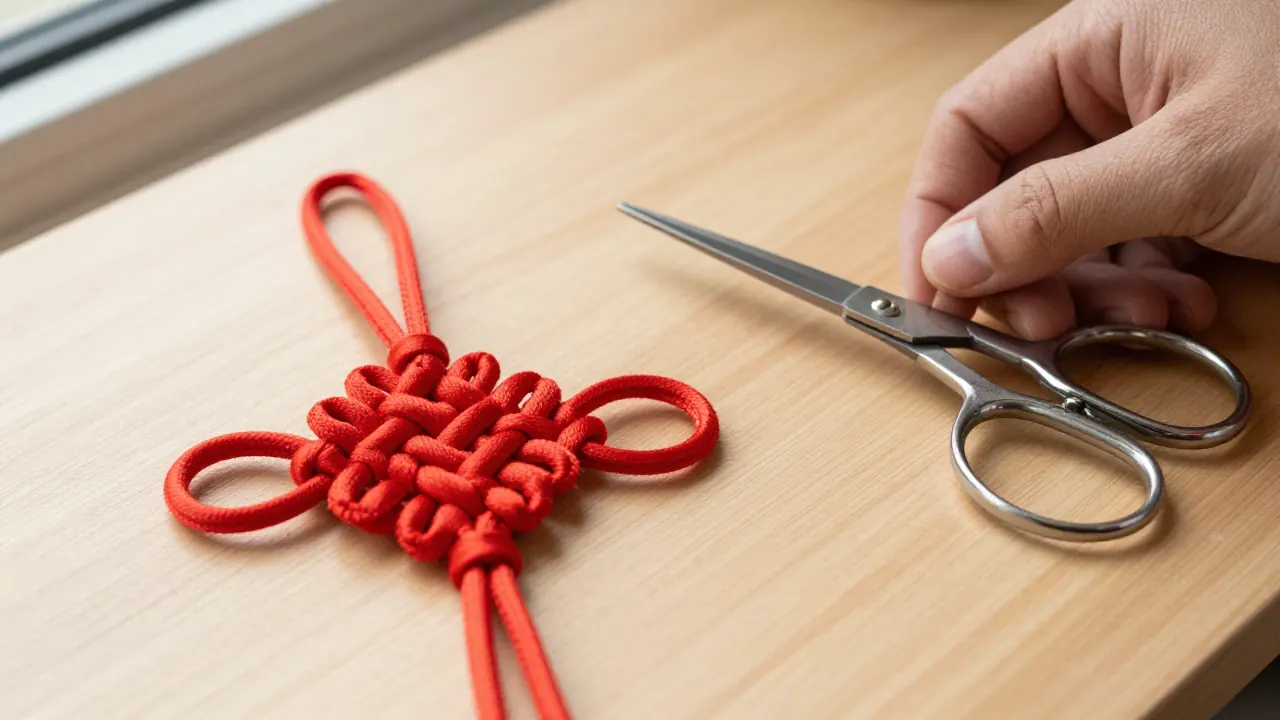
Identify the button knot by its compact rounded structure
A Chinese button knot is easier to understand when it is first treated as a physical form. It is small, rounded, and compact, so it can sit at the end of a cord, work with a loop, or finish a decorative strand without taking up much space. This shape is why the knot appears in both practical closures and small decorative craft work.
That visual form matters more than a sales label. A listing may call an item a lucky knot, a frog button, or a decorative closure, but the useful check is still the knot itself: is the knot acting like a rounded stopper, a fastening point, or a neat finish on an object that needs control as well as decoration?
Read closure use and decorative use as two related jobs
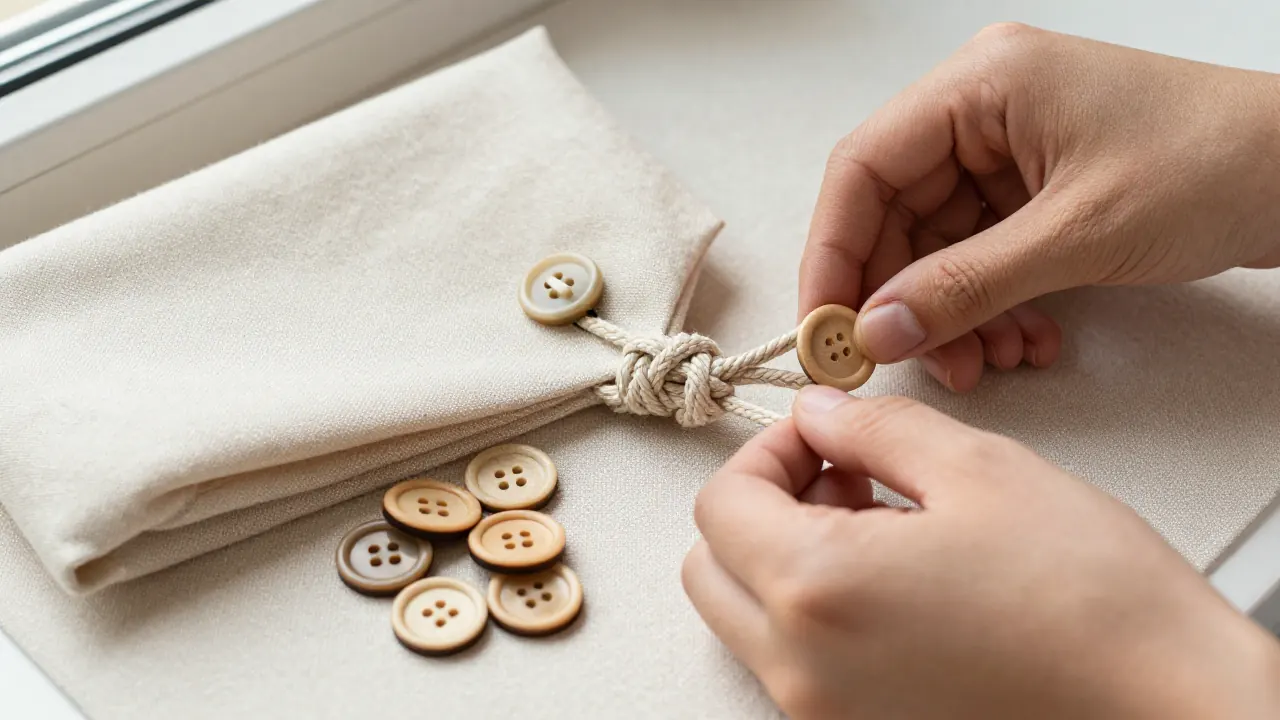
The button knot often sits where a cord needs to stop, pass through a loop, or create a simple fastening point. In that role, the knot has a practical job before any symbolic one. It keeps a closure tidy, helps a bracelet or garment detail stay organized, and gives the cord a finished end that looks intentional.
The same knot can also become decorative when it is repeated on jewelry, hanging ornaments, or gift wrapping. That is why the meaning should be read from use and setting together. A closure knot on a handmade pouch does not carry exactly the same message as a button knot placed on a festive ornament, even if the knot form is similar.
Choose cord thickness and placement before talking about symbolism
A small button knot can disappear if the cord is too thin for the object, while a heavy cord can make the knot feel bulky on jewelry or clothing trim. In real use, material and scale change how the knot is read. A slim bracelet finish, a silk-style garment closure, and a craft ornament all need different proportions.
That is why the practical question comes first: what does the knot have to do on the object? Once the size, cord, and placement make sense, then a cultural explanation can be added without overstating it. This keeps the page useful for readers choosing craft details, not just collecting symbolic phrases.
Explain the knot as a crafted detail when guests or buyers ask
When a guest notices the knot, a short explanation is usually enough: it is a Chinese button knot used as a closure or decorative finish, and its neat compact form is part of the appeal. That answer is concrete, visible, and easier to trust than a vague claim that every button knot guarantees one result.
For a buyer or maker, the better description names the object first. Say whether the knot is finishing a bracelet, helping a closure, or serving as a decorative accent on a gift or garment. This keeps the explanation anchored to what the reader can actually see and use.
Keep the craft object separate from a fixed fortune claim
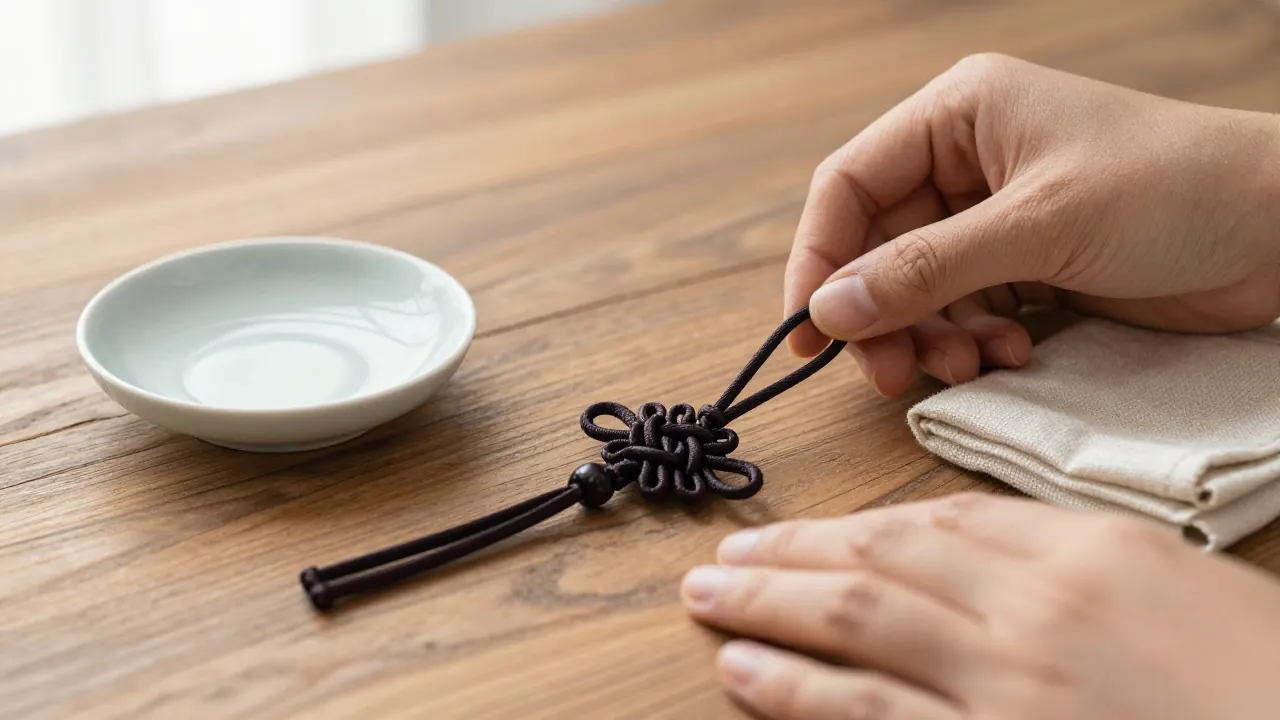
A button knot can feel meaningful because someone chose the cord, tied it carefully, and placed it on an object with a purpose. Those real choices already give the knot value. The page does not need to turn that value into a prediction about wealth, marriage, career, or protection.
If the reader wants to choose one well, the better checklist is practical: is the knot neat, is the scale right for the object, and does the placement make sense? That respects both the craft tradition and the reader's decision without forcing a universal symbolic verdict onto a small handmade detail.
Choosing a button knot for a real object
- Check whether the knot is acting as a closure, a cord end, or a decorative accent.
- Match the knot size to the cord thickness and the object it finishes.
- Use placement and material to explain the knot before making a symbolic claim.
- Describe the knot as a crafted cultural detail, not a guaranteed result.
- Compare garment, jewelry, and ornament use before choosing one default meaning.
Button knot questions
What does a Chinese button knot mean?
A Chinese button knot is best understood through its use as a compact closure or decorative finish. Any symbolic meaning depends on the object, occasion, and cultural context rather than one universal promise.
Is a button knot only decorative?
No. It is often practical as well. The compact rounded form makes it useful for closures, cord ends, and neat fastening details on garments, jewelry, or craft items.
Can a button knot be used on gifts or jewelry?
Yes. It can work well on gifts, bracelets, cords, and small ornaments because it stays compact while giving the object a finished handmade detail.
Does a button knot guarantee luck?
No. It is a craft and design element that can carry a good wish in context, but it does not guarantee luck, wealth, love, or future events.